I’m now well and truly on my way to London. The plan is to stop near Watford, north of the city, to visit the Harry Potter (Universal) Studio once Rianne and the boys arrive. In the meantime, I’ll scope it all out, find the best mooring spot(s) and easiest route from Heathrow so when they get here, all jet-lagged, it’ll be as smooth as possible.
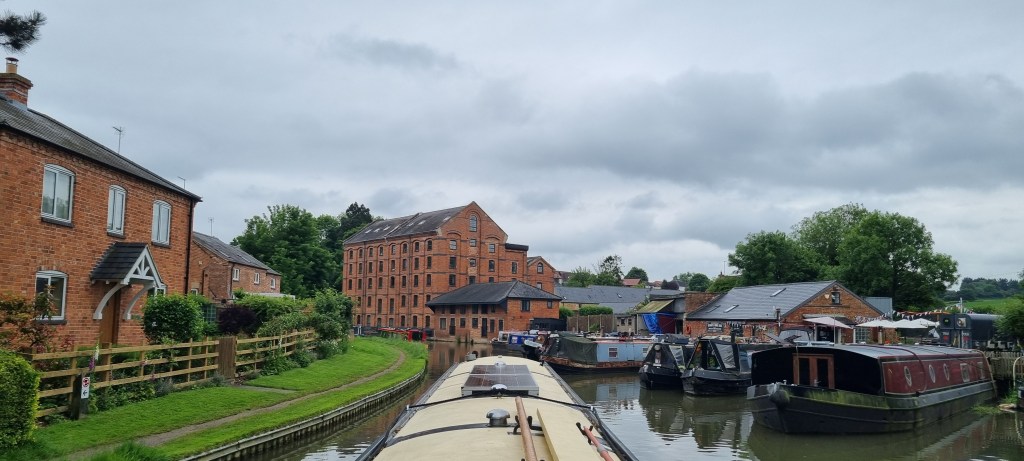
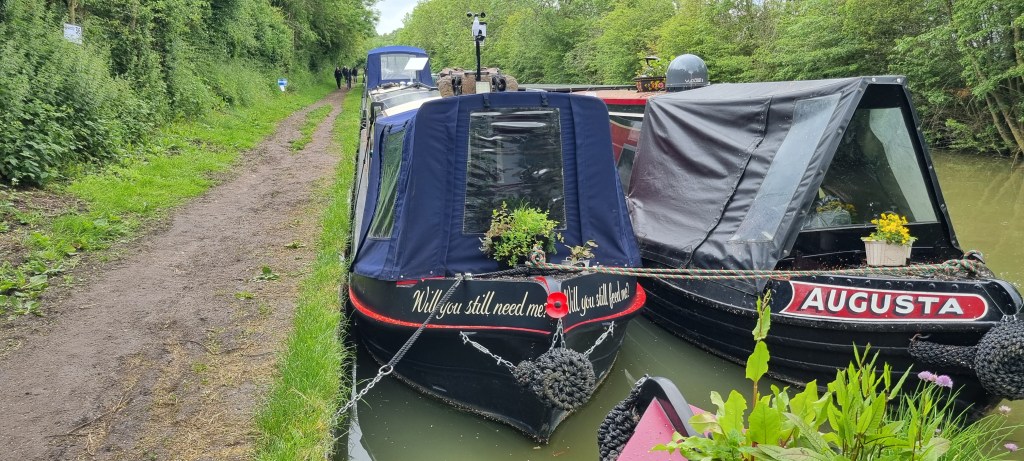
The Grand Union Canal has been very pleasant for the most part. It’s somewhat different than northern canals, there’s few spots with ‘Armco’, the metal sheet-piling used to make mooring easier. I’ve used my pins more here than in the last 5 years up north. This means I’ve had to pound stakes into the towpath to tie to which can be a bit uncertain. They tend to pull out when a boat goes by too quickly (don’t worry Chris, I remembered your foolproof trick and it’s been working great!). On Armco, there are chains (my favourite) or hooked pins that can be used to moor more (lol) securely.

The whole canal has a similar feel to the Kennet & Avon, my first canal in 2018, although that was even less ‘developed’, with lots of mud-banked mooring locations and almost always on pins. Also here there are many live-aboard boats and very few hire boats. But the people are generally great and very helpful. It’s got a real community feel.
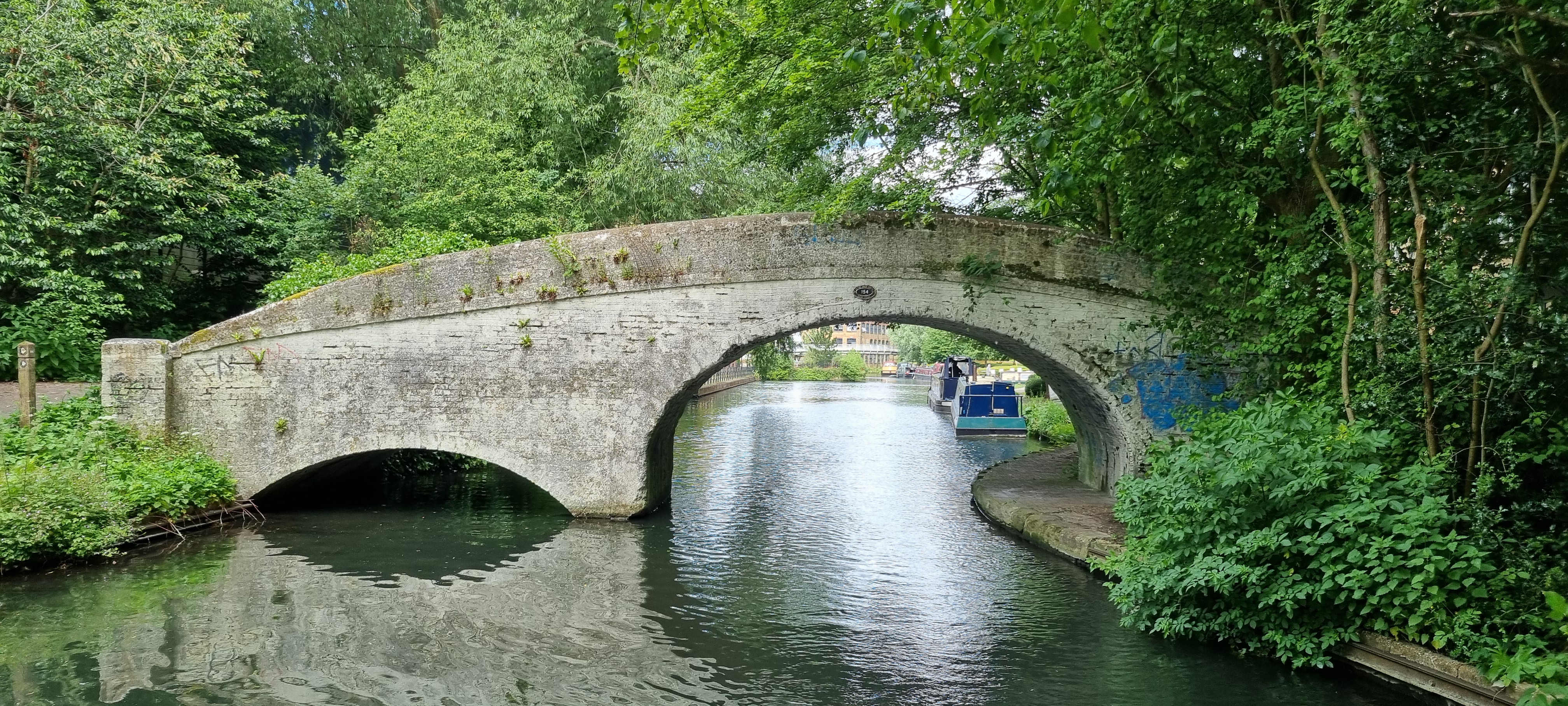
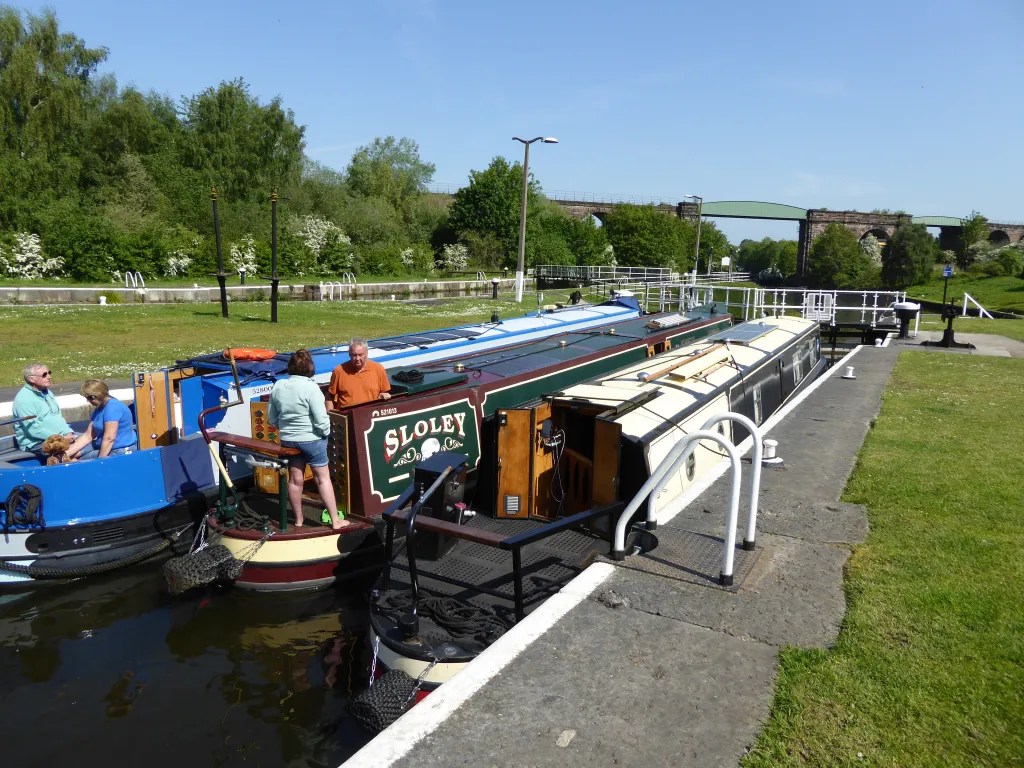
One thing I’m getting a bit tired of down here is the broad canals. There are two ‘types’ of canal, broad and narrow. Broad canals are generally wider (obviously) and have locks that are about 14′ wide. They can accommodate two narrowboats at a time (like mine) or one wide-beam (usually 10-12′ wide). These are only found in the south or the north, not in the Midlands. And there’s no actual canal connection between these areas for wide-beams, only narrowboats. This is a quirk of history that I must look into, I’m not sure the reason.

The problem is, for a solo-boater, they’re a bit of extra work to use unless you can pair up with another narrowboat (it also really helps if they have crew). The gates are very heavy and they take a longer time to fill or empty, and with the extra room in the lock the boat should be securely tied to one side to avoid banging around with the water rushing in or out. Mostly just slower and somewhat more work.

In other news, here’s an interesting story:
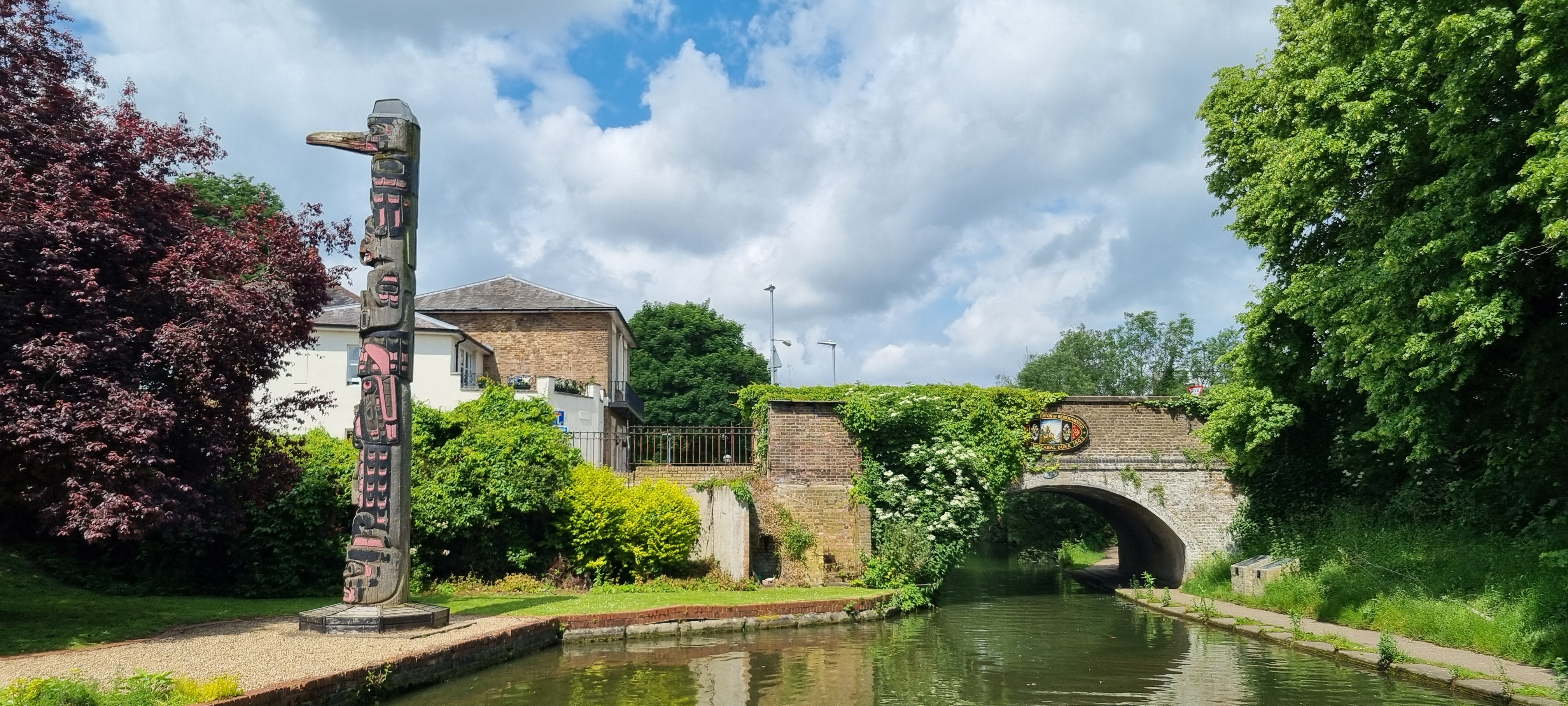
From the Chiltern Canal Boat Holidays’ page:
“This genuine Canadian totem pole is located next to the Grand Union canal in Berkhamsted. Commissioned by William John Alsford from the Canadian First Nations artist, Henry Hunt, as a thank you to Vancouver Island locals for saving his brother, it was erected in 1968 and stands at a whopping 9m tall. Made of western red cedar it is one of just a few totem poles in the UK, and can be admired when you cruise along the canal near bridge 140D.”
Apparently Mr. Alsford’s brother fell on hard times and was saved from starvation by a local First Nations village near Tahsis (I’m not sure which one). This is an example of a certain level of respect and understanding, something not always obvious here with regard to First Nations. I came across this day-trip boat (and had a chat with the management about how inappropriate it was):





















































 A Canuck on the Cut